Oral Clear Chewing Gum: Expert Review & Guide
You’ve got an oral drug test coming up, and the clock is ticking. The anxiety is real. You need a clear, fast solution that doesn’t involve a week of painful detox. That’s where a product like oral clear chewing gum enters the picture.
So, what is it? In simple terms, Clear Choice Oral Clear Gum is a specialized, single-use gum designed for one specific job: to temporarily neutralize the saliva in your mouth, aiming to reduce detectable drug residues during a mouth swab test. Think of it as a targeted, short-term masking agent for your mouth—not a full-body detox.
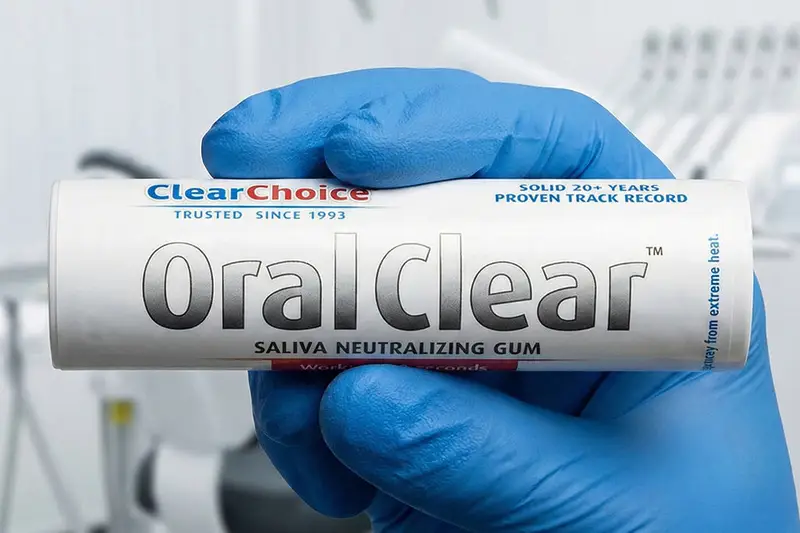
This guide is built for you, the beginner facing this stressful situation. We’re going to break down exactly what this oral clear saliva neutralizing gum claims to do, how it’s supposed to work, and—most importantly—whether it’s a viable option for your specific test. Our goal is to give you the clear, actionable facts so you can make an informed decision without the hype. We’ll cover its intended use as an oral clear gum detox tool, its real-world limitations, and what you absolutely need to know before considering it. Let’s get into the details.
Why People Use Oral Clear Gum: Addressing Saliva Test Anxiety and Needs
Let’s be clear: the moment you get called for a mouth swab test, a specific kind of anxiety kicks in. It’s the panic of the surprise, the fear of the unknown, and the high stakes of losing a job or facing legal trouble. This is the exact scenario Oral Clear Gum is built for. It’s not for someone who quit smoking two weeks ago. It’s for the daily user who just got the call—or the random notice—and needs a solution now.
Saliva tests are the go-to for many employers and probation officers precisely because they’re hard to cheat and have a short, actionable detection window. According to available data, THC from cannabis can be detected in saliva for 12 to 24 hours in occasional users, but that window stretches up to 72 hours for heavy, chronic users. For other substances, the timelines vary: cocaine can linger for 24-48 hours (up to 10 days in chronic users), methamphetamine for 2-4 days, and opioids like fentanyl for up to 4-7 days. The core challenge is that this window is often shorter than a urine test, but it’s also unpredictable and heavily influenced by your metabolism and frequency of use.
That’s the gap this product aims to bridge. Its core purpose is to provide a temporary, on-demand solution for those facing a test with little to no notice. It directly addresses the primary pain points:
- The Surprise Factor: You can’t prepare for a test you didn’t know was coming. The gum is designed for that last-minute, “test is in two hours” scenario.
- Protecting Personal Freedom: For many, this is about the principle. What you do on your own time is your business. Using a product like this is a tactical way to maintain that boundary while securing the income and stability a job provides.
- Securing Immediate Income: The goal is straightforward: pass the test, get the job, or keep the job. It’s a tool for navigating a system that many feel is unfairly aligned against off-the-clock cannabis use.
The reality is, people are constantly researching how to pass a mouth swab drug test under pressure. Oral Clear Gum positions itself as one of the most popular commercial methods for exactly this high-stakes, time-crunched situation. It’s a direct response to the anxiety and logistical nightmare of short-notice screening.
So, you understand the why—the urgent need it claims to meet. But that leads to the next logical question for anyone considering it: Okay, it’s for passing tests, but how is a special gum supposed to actually clean your mouth?
How Oral Clear Gum Works: Explained Mechanisms and Temporary Effects
So, how does a piece of gum claim to do what hours of brushing can’t? Let’s break down the proposed mechanism in plain terms.
The core idea isn’t about freshening your breath—it’s about creating a temporary, localized shield inside your mouth. Think of it less like a mint and more like a tactical, short-term rinse for your saliva.
The Claimed Step-by-Step Process
According to the product’s marketing, the action unfolds in a specific sequence:
- The Activation: You bite down hard on the gum, rupturing a liquid-filled capsule inside. It’s crucial to do this with your lips sealed to contain the liquid.
- The Distribution: You then chew vigorously for 30 seconds. The gum base is designed to help spread this released liquid across all surfaces—your cheeks, gums, tongue, and teeth.
- The Neutralization Window: Once coated, the liquid is claimed to immediately begin neutralizing drug metabolites in your saliva. The manufacturer states this effect kicks in within 30 seconds and provides a clear window for up to 30 minutes, with the best results in the first 10 minutes.
What’s Supposedly In The Liquid?
The exact formula is a proprietary secret, but the ingredient list points to how it might work. It’s a blend aimed at altering your mouth’s environment:
- Soy Lecithin: Acts as an emulsifier, helping the liquid mix with your saliva and cling to mouth surfaces.
- Perhydrol (a Hydrogen Peroxide Derivative): A cleaning agent that may help alter the oral pH and reduce the detectability of metabolites.
- Citric Acid: Another pH adjuster, working to create an environment less friendly to toxin detection.
- Flavors & Sweeteners: These aren’t just for taste; they’re meant to stimulate saliva flow, which can help dilute residues.
- BHT (Butylated Hydroxytoluene): An antioxidant that some marketers claim aids in metabolite neutralization, though this lacks scientific backing.
The Critical Reality Check: Masking, Not Detoxing
This is the most important distinction. Oral Clear Gum is marketed as a temporary masking agent, not a permanent detox solution. It doesn’t cleanse your body or remove THC from your system. The claim is that it coats and neutralizes the metabolites currently present in your mouth’s saliva for a brief period.
But the truth is, this mechanism faces significant scientific and practical hurdles. There are no peer-reviewed clinical trials validating these neutralization claims. Independent analysis suggests that while chewing gum increases saliva flow and can dilute a sample, it doesn’t chemically remove drug metabolites bound to your oral tissues. Modern lab tests are also designed to detect diluted or adulterated samples, and a sudden pH change from a product like this could even flag your sample as tampered with.
For heavy, daily users, especially those using potent concentrates, the persistent THC deposits in your oral cavity from plaque and mucous membranes may simply overwhelm this short-term masking attempt.
The bottom line: The gum’s proposed action is a localized, temporary coating effect—a tactical play for a 30-minute window. It is fundamentally different from a full-body cleanse. If you’re looking for a method to permanently clear metabolites from your system, you’d need to explore a different strategy altogether, like learning how to flush your system for a drug test through abstinence and metabolic support. The gum operates on a much narrower, higher-risk timeline.
Step-by-Step Instructions for Using Oral Clear Gum Effectively
Step-by-Step Instructions for Using Oral Clear Gum Effectively
Let’s be clear: using this gum correctly is all about precision. A single misstep in timing or technique can waste your shot. This isn’t a casual chew—it’s a tactical procedure. Follow these steps exactly to give yourself the best possible chance.
1. Nail the Timing: Your Most Critical Variable.
The entire process hinges on a 30-minute window. You must begin chewing 5 to 10 minutes before your test is scheduled to start. This isn’t a suggestion; it’s the core of the strategy. The gum’s liquid coating needs time to activate and fully coat your mouth, and it only lasts about 30 minutes. If you chew too early, the effect wears off. Too late, and you’re still chewing in the waiting room. For a test at 10:00 AM, you should be biting down between 9:50 and 9:55 AM.
2. Prepare Your Mouth: Create a Clean Slate.
Before you even think about the gum, your mouth needs to be as clean as possible. In the hours leading up to the test, stop all consumption—this is non-negotiable for heavy users. Then, about an hour before, give your mouth a thorough scrub: brush your teeth, gums, and tongue aggressively, and floss meticulously. This removes surface debris and plaque where THC residues hide, allowing the gum’s liquid to make better contact with your oral tissues.
3. Activate and Distribute: The 30-Second Drill.
When your timed moment arrives, remove the gum capsule from its tube and wrapper. Place it in your mouth and seal your lips tightly. Now, bite down firmly to burst the inner capsule. You’ll feel the liquid release. Immediately begin chewing and swishing vigorously for a full 30 to 60 seconds. The goal is to force that liquid over every single surface: swish it across your cheeks, under your tongue, along the gumline, and across the roof of your mouth. Don’t just chew—agitate the liquid like a powerful mouthwash. Do not swallow the liquid or the gum.
4. Discreet Execution: The Car Method.
Most of you will be doing this in a parking lot. Park, and have everything ready. After chewing, you’ll need to spit the gum out. Use the saved wrapper for disposal, or have a small baggie ready. Keep your windows up to contain any sound or movement. The key is to look calm—just someone sitting in their car for a few minutes before an appointment.
5. The Final Step: The No-Drink Rule.
Once you spit the gum out, the coating is active. Do not eat, drink, or even smoke anything until after your swab is taken. A sip of water can wash away the protective layer you just applied. Walk in, take the test, and only then can you resume your normal routine. Following these steps to the letter is your actionable playbook. But the big question remains: even with perfect technique, does this method actually hold up under real-world lab scrutiny?
Pre-Test Checklist: Ensuring Readiness for Your Oral Drug Test
You’ve got the instructions down. But before you even think about unwrapping that gum, a final, granular check is what separates a pass from a fail. Think of this as your pre-flight checklist—the last line of defense to ensure every variable is in your control. Skipping a step here can undermine the entire process.
Let’s break down the tangible actions you need to take.
1. The 48-Hour Toxin-Free Window.
This is non-negotiable. You need to verify zero intake of any toxins—THC, nicotine, anything—for at least 48 hours prior to your test. This isn’t about quitting forever; it’s about strategically pausing to let your body’s systems stabilize. This window is your foundation. For a detailed action plan on maximizing this period, our guide on the best way to detox from thc is your go-to resource.
2. Clear the Oral Cavity.
Remove all oral jewelry—tongue rings, lip rings, retainers. These items can trap residual toxins and compromise the neutralization process. Next, perform a deep-clean. Brush your teeth, but don’t stop there. Vigorously brush the insides of your cheeks and your entire tongue, where residues cling. This mechanical removal is a critical first layer of defense.
3. Product Integrity Check.
Inspect your Oral Clear Gum packaging. Confirm the expiration date is valid. More importantly, feel the gum capsule through the foil. It should be firm and intact. The product is sensitive to heat because of the liquid-filled capsule inside; if it feels mushy or compromised from being left in a hot car, its effectiveness is quantifiably reduced. Use a fresh, properly stored piece.
4. The 15-Minute Rule.
This is where timing becomes everything. Do not eat or drink anything—including water—for at least 15 minutes before you plan to use the gum. According to research, beverages stimulate immediate saliva production, which can dilute and wash away the neutralizing agents you’re about to apply. Acidic drinks are especially problematic, causing an immediate drop in salivary pH that can last for minutes. Your goal is a neutral, stable oral environment when you use the gum.
5. Accessibility and Discretion.
Plan your “pattern interrupt.” Confirm the gum is in a pocket, not buried in a bag. You need to be able to access and use it discreetly, often in a car or restroom, without drawing attention. Practice the motion: unwrap, chew for 30 seconds, swish, spit. Make it a seamless, calm action—just someone sitting in their car for a few minutes before an appointment.
6. Final Mental Check.
Once you’ve spit the gum out, the coating is active. The final, critical rule: do not eat, drink, or even smoke anything until after your swab is taken. A single sip of water can wash away the protective layer you just applied. Walk in, take the test, and only then can you resume your normal routine.
Following this checklist to the letter transforms the product from a hopeful gamble into a structured, actionable playbook. It addresses the core challenges—from the anxiety of a short notice test to the fear of a strict lab—by putting you in proactive control of every variable you can manage.
Oral Clear Gum Effectiveness: Evidence, Reviews, and Real-World Outcomes
Let’s be clear: when your job or freedom is on the line, you need more than marketing promises. You need a realistic picture of what works. So, what do the actual oral clear gum reviews and effectiveness reports tell us? The truth is, it’s a mixed landscape of anecdotal user success stories and significant limitations, and understanding this balance is your first line of defense against disappointment.
The core challenge is this: there are no peer-reviewed clinical trials or independent lab tests published that verify Oral Clear Gum’s specific “neutralization” claims at standard drug test cutoffs. The manufacturer’s mechanism—proprietary agents that supposedly bind or degrade toxins in 30 seconds—lacks third-party scientific validation. According to drug testing supply experts, while chewing gum increases saliva flow and can dilute a sample temporarily, it doesn’t chemically remove drug metabolites like THC that are deposited in your oral tissues.
That’s why we rely on real-world feedback. Scouring forums and communities, a pattern emerges in these effectiveness reports. Many users report passing mouth swab tests after using the gum precisely as directed. These user success stories often share common threads: strict adherence to the 30-minute window, excellent recent oral hygiene, and tests that used instant-result cups rather than being sent to a lab.
However, the failures are just as instructive. Reports of negative outcomes frequently correlate with specific, avoidable variables. Here’s a granular breakdown of what moves the needle:
- Lab Strictness & Test Type: This is the biggest wildcard. A quick on-site screening is a different beast than a swab sent for GC-MS confirmation at a high-tech lab. The latter can detect metabolites despite initial interference, a real-world limitation many first-time users overlook.
- Time Since Last Use: Detection windows are not myths. THC can linger in saliva for 12-72 hours for a chronic user. If you smoked a blunt on the way to the test, the gum is fighting an uphill battle against fresh residue.
- Your Personal Biology: Individual metabolism directly impacts how quickly drug concentrations drop in your saliva. A heavy, daily concentrate user has a fundamentally different starting point than a light, occasional smoker.
- Oral Hygiene & Residue: Plaque, tartar, and smoke residue act as reservoirs for drug metabolites. The gum’s coating can’t penetrate these built-up layers, which is why a rigorous brushing and flossing routine beforehand is non-negotiable in success stories.
- The 30-Minute Clock: The neutralizing effect is temporary. If your test is delayed in a waiting room past that window, user reports indicate the protection evaporates, leading to failure.
So, is it snake oil? That’s the core objection, and the honest answer is nuanced. It’s not a magical “detox” that cleanses your system. It’s a temporary, physical barrier—a coating designed to mask toxins in your mouth’s fluid for a short period. Its impact is entirely dependent on you controlling the variables listed above. Many people also try home remedies like peroxide, setting up a natural comparison. The gum’s value proposition isn’t that it’s a scientifically proven device, but that it’s a formulated, timed, and discreet version of a dilution strategy, packaged for a high-stakes moment.
In short, the real-world feedback suggests Oral Clear Gum can be an effective tool within a very narrow, well-executed scenario. It earns its reputation not from lab data, but from a chorus of user reports that highlight a simple truth: success is less about the gum itself and more about your ability to control the conditions surrounding its use.
Comparing Oral Clear Gum to DIY and Commercial Saliva Test Alternatives
When you’re facing a test, you’re essentially choosing between three paths: the DIY route, a commercial mouthwash, or a product like Oral Clear Gum. Each has a different logic, cost, and risk profile. Let’s break down the trade-offs so you can make an informed choice based on your specific situation.
The DIY Playbook: Peroxide, Brushing, and Mouthwash
This is the go-to for anyone trying to save cash. The logic is straightforward: physically scrub and chemically cleanse your mouth to remove or mask drug residues.
- Hydrogen Peroxide (3% Solution): The idea is that its bubbling action can lift particles from your mouth’s surfaces. The major drawback is the very real risk of chemical burns, severe irritation, and raw gums—especially if you’re brushing aggressively beforehand. Many report a sore, painful mouth for days.
- Intense Brushing & Mouthwash: This aims for mechanical removal. Brushing your teeth, gums, tongue, and cheeks hard, followed by a strong mouthwash, tries to physically dislodge residue. The downside? Over-brushing can damage enamel and irritate gums, and standard mouthwash may only provide a temporary mask, not a neutralization.
The core appeal is cost—these items are often already in your bathroom. The core gamble is reliability and safety. These methods are unregulated, lack any standardized timing, and their effectiveness is wildly inconsistent, especially for heavy, daily users. The physical pain and potential for mouth injury are tangible, immediate risks.
Commercial Alternatives: Mouthwashes and Sprays
If you’re willing to spend some money, commercial detox products offer a more formulated approach.
- Detox Mouthwashes (e.g., Toxin Rid Rescue Wash): These are specialized solutions. You swish a measured amount for several minutes, aiming for a clear window of 30-60 minutes. They’re more targeted than DIY peroxide and are designed for this specific purpose.
- Detox Sprays (e.g., Kleaner): These offer quick, discreet application—just a few sprays. They often focus on odor and bacteria alongside toxins, which can make the timing and depth of cleansing less clear compared to a mouthwash or gum.
These products typically cost between $15 and $35 per bottle, which allows for multiple uses or practice runs. They represent a middle ground: more convenient and potentially safer than raw peroxide, but still requiring you to find a private moment to swish and spit.
Direct Comparison: Gum vs. The Field
So where does Oral Clear Gum fit? It’s engineered for a very specific, high-pressure scenario: last-second, discreet use. Here’s a granular look at how it stacks up.
| Factor | DIY Methods (Peroxide/Brushing) | Commercial Mouthwashes | Oral Clear Gum |
|---|---|---|---|
| Cost | Very Low ($0-$5) | Moderate ($15-$35 per bottle) | High ($90-$95 per single use) |
| Convenience | High (materials on hand) | Moderate (requires private sink) | Very High (pocket-sized, no water needed) |
| Reported Reliability | Highly Unreliable; anecdotal | More reliable than DIY; still anecdotal | Most reliable for its specific window; still anecdotal |
| Safety Profile | High Risk (burns, irritation) | Generally Low Risk | Low-Moderate Risk (potential irritation from perhydrol) |
| Discretion | Low (obvious prep required) | Low (must swish/spit privately) | Very High (looks like chewing gum) |
| Best For | Those with $0 budget and high pain tolerance | Those with a private bathroom and 10-15 min prep time | Those needing to act in a parking lot with 30-60 seconds notice |
Is the Gum’s Price Justified Over DIY Risks?
This is the central calculation. If you’re a daily smoker with a test tomorrow, spending $90 on a single-use capsule feels like a gut punch—especially when a $2 bottle of peroxide sits under your sink.
But the truth is, you’re not just paying for ingredients. You’re paying for formulation, timing, and discretion. The gum is a packaged, timed protocol. The DIY route is a risky experiment where you are the chemist, and the margin for error is your job offer.
The gum’s value proposition is tangible in high-stakes, time-crunched moments. If you have a day to prepare, a mouthwash might be a smarter, more economical bet. If you have 30 minutes and a bathroom, DIY might work. But if you’re walking into the testing center in five minutes and need to act now, the gum’s convenience and engineered window are what you’re buying.
Ultimately, the choice aligns with your resources and your risk tolerance. The DIY path is cheap but fraught with physical and reliability risks. Commercial mouthwashes offer a better balance. Oral Clear Gum is the premium, last-resort tool for when time, privacy, and peace of mind are the most valuable commodities you have.
Safety Considerations for Oral Clear Gum: Side Effects and Warnings
Your safety is worth the five-minute read. Before you chew anything, it’s smart to know what you’re putting in your mouth and how your body might react. Oral Clear Gum isn’t a candy; it’s a specialized product with a specific, temporary job. And like any product with active ingredients, it comes with a profile of known and potential side effects you should weigh.
Known and Potential Side Effects
Based on user reports and its ingredient list, the most common issues are mild and temporary. Think of it like trying a new strong mint—some people notice a tingling, slight burning, or numbness, especially if they have sensitive gums. An unusual or chemical aftertaste is also reported by some. A few users mention mild digestive discomfort like gas or an upset stomach, though how often this happens isn’t documented.
The gum contains perhydrol, a peroxide derivative. This is a key active agent, but it’s also what can cause that irritation. For most, it’s a brief sensation. For others, particularly if used too often, it could lead to more noticeable mouth soreness.
Clear Warnings: Who Should Avoid This Gum
This is non-negotiable. Do not use Oral Clear Gum if any of the following apply to you:
- You have Phenylketonuria (PKU). The gum contains aspartame, which breaks down into phenylalanine—a serious danger for people with this condition.
- You have a soy allergy. It contains soy lecithin, which can trigger an allergic reaction.
- You have active mouth issues. This includes canker sores, gingivitis, gum disease, bleeding gums, or recent dental work. The peroxide component can significantly worsen irritation and pain in compromised tissue.
- You are pregnant or breastfeeding. There is zero safety data for these situations. Consult a doctor first.
- You take other medications or have a chronic condition. How the gum’s ingredients interact with prescriptions or health issues is unknown. When in doubt, ask a clinician.
Stop using immediately and consult a healthcare professional if you experience significant burning, numbness, or discomfort that doesn’t fade quickly.
Comparing Safety: Gum vs. Harsh DIY Methods
Here’s where we address a major concern head-on: the fear that 3% hydrogen peroxide will cause chemical burns. That fear is valid. DIY peroxide rinses are unregulated. Using them too strong, too often, or for too long can indeed lead to painful chemical burns, severe tissue damage, and raw, irritated gums. You’re essentially gambling with a household chemical.
Oral Clear Gum, for its part, is engineered for a brief, controlled exposure. The perhydrol is part of a proprietary blend designed for a short, specific action—not a prolonged rinse. While it can still cause irritation, the risk profile is generally considered different and potentially lower than aggressively swishing a potent peroxide solution. You’re trading the unpredictable harshness of a DIY chemical for a commercial product with a more defined, though not risk-free, usage window.
The bottom line on safety is this: the gum carries real, ingredient-based risks for certain people and can cause irritation. It is not FDA-approved, and its long-term effects are unstudied. However, when used exactly as directed by a healthy individual, it presents a more controlled alternative to the potentially damaging DIY methods many are tempted to try. Knowing these risks allows you to make an informed choice, not a desperate one.
Where to Buy Authentic Oral Clear Gum and Avoid Counterfeits
Let’s be clear: knowing where to buy authentic Oral Clear Gum is just as critical as knowing how to use it. The market has fakes, and a counterfeit product won’t just waste your money—it could fail you at the worst possible moment. Your goal is to get the real thing, reliably and discreetly.
Official Channels & The “Near Me” Reality
First, the straightforward answer on availability. You won’t find Oral Clear Gum on the shelves at Walmart, Amazon, or Walgreens. It’s a specialized product sold through specific online retailers.
The most reliable sources are official websites and authorized resellers. These vendors typically ship directly from U.S.-based warehouses in states like New York or Nevada. All packages are plain and unmarked for your privacy—a tangible benefit when discretion matters. For those searching “oral clear gum near me,” the reality is that local, in-person pickup is extremely rare. Your safest bet is these established online channels, which ship domestically.
How to Spot a Counterfeit: Your Actionable Checklist
That’s why your next step is verification. Counterfeits are a real risk, and they often look convincing. Protect yourself by checking for these red flags before you buy:
- Price That’s Too Good: Authentic gum is priced between $90 and $124. A listing for $50 or $60 is a major warning sign. Don’t let a “deep discount” compromise your result.
- Packaging Integrity: The genuine product has strong, high-quality seals. If the packaging looks flimsy, the colors are off, or the seals are weak, it’s likely a fake.
- Seller Reputation: Stick to vendors with a clear history and positive, detailed reviews. Be wary of marketplace listings with vague seller information or no customer feedback.
This directly addresses a common fear: “Are the success stories just from people who got lucky with a fake test?” By purchasing from a verified source, you eliminate the variable of a counterfeit product. You’re aligning your investment with the highest probability of getting the authentic formula. Once you’ve secured the real gum from a trustworthy seller, you can focus entirely on the execution.
Cost and Value of Oral Clear Gum: Honest Considerations for Beginners
Let’s be clear about the investment. Authentic Oral Clear Gum typically retails between $90 and $124 for a single-use capsule. That’s the immediate, tangible cost. For anyone currently between jobs or watching their budget, that number can feel steep—and that’s a completely valid reaction.
But the real value question isn’t just about the price tag. It’s about aligning that cost against the potential impact of failing your test. Consider the alternative outcomes: losing a job offer you’ve already banked on, jeopardizing a current position through a random screening, or facing legal consequences if you’re on probation. The financial and personal fallout from those scenarios often dwarfs the cost of the gum.
This is where user sentiment splits. Many in the community frame it as cheap insurance for a critical moment—a one-time fee to protect a steady income, benefits, and peace of mind. At the same time, others on a tight budget see it as a significant hurdle, especially with the knowledge that one capsule covers only one test session. If you face repeat testing, the cost multiplies.
A crucial part of this calculation is the product’s shelf life. The gum ships with a guaranteed minimum six-month expiration window. However, if it expires before you use it, its value drops to zero. That means timing your purchase is part of the strategy—you’re aligning your spend with a foreseeable need.
Ultimately, you have to quantify your own stakes. What is the specific job or opportunity worth to you in concrete terms? What’s the cost of starting your search over? By weighing the single-use price against the potential loss of income, benefits, or freedom, you can build a personal cost-benefit framework that moves beyond the sticker price and focuses on your specific risk and reward.
Common Mistakes and Practical Tips for Passing Oral Drug Tests
Success with Oral Clear Gum isn’t just about chewing it—it’s about avoiding the unforced errors that sink countless tests. Let’s be clear: the gum is a tool, but your overall strategy determines its impact. Here are the critical mistakes to avoid and the practical tips that align with real-world physiology.
Critical Mistakes That Can Derail Your Test
First, smoking too close to test time is the most common, high-stakes error. Research shows oral contamination from use can spike saliva drug concentrations abnormally for the first 1-2 hours. Lighting up in the parking lot isn’t just risky; it floods your mouth with residue that no quick fix can fully eliminate. You need a tangible buffer.
Second, failing to manage your saliva flow is a granular detail with major consequences. Dehydration reduces saliva flow rate by up to 67%, slowing the natural clearance of substances from your mouth. Showing up dehydrated with “cottonmouth” not only makes sample collection difficult but also prolongs drug residence time. It’s a physiological double-whammy.
Third, ignoring the 10-minute rule before the test is a simple but costly oversight. Standard protocols require abstinence from eating or drinking right before the swab to prevent dilution or contamination that could invalidate the sample. Chugging a gallon of water or mouthwash in the lobby can raise red flags and compromise your result.
Pro Tips from the Stoner Nation
Now for the actionable intel. Hydration is your silent ally. Well before your test window, drink water consistently. Adequate hydration maintains optimal saliva flow, which acts as your body’s natural rinsing system. This isn’t about flooding your system last minute; it’s about laying the groundwork for efficient oral clearance.
Leverage the power of sour. Sour and carbonated drinks strongly stimulate saliva secretion and the swallowing reflex, enhancing mechanical removal of oral contents. A sour candy or a sip of a citrus-based beverage (well outside the 10-minute pre-test window) can kickstart this process. Think of it as activating your body’s own cleaning crew.
Avoid red meat in the hours before your test. While direct clinical citations are limited, anecdotal evidence from the community is robust. The theory is that fatty residues can coat the mouth and potentially trap drug metabolites. Given the stakes, this low-cost, practical tip is worth the major dietary adjustment.
Finally, stay calm. Anxiety is a tangible factor—it can dry your mouth and cloud your judgment. Remember, saliva tests have a short detection window. Your preparation, combined with Oral Clear Gum’s temporary neutralizing effect, is designed to bridge that gap. Control what you can control.
By sidestepping these mistakes and implementing these tips, you’re not just using a product—you’re executing a comprehensive strategy on how to pass a drug test for THC. This is about playing the odds intelligently, respecting the science of saliva, and giving yourself every possible advantage.
Key Takeaways: Essential Facts About Oral Clear Chewing Gum for Beginners
Alright, let’s cut through the noise and land on the essential facts. After breaking down the mechanics, the strategies, and the potential pitfalls, here’s the distilled, no-nonsense summary of what you need to know about Oral Clear Gum.
What It Is & Its Intended Use
Oral Clear Gum is a single-use, temporary saliva-masking tool. It’s not a detox—it doesn’t clean THC from your system. Instead, it’s designed to coat your mouth with a neutralizing liquid for a short window, aiming to reduce detectable drug residues during a mouth swab test.
The Honest Picture of Its Effectiveness
Let’s be clear: there are no peer-reviewed clinical trials proving its claims. User reports are anecdotal and mixed. Its success isn’t guaranteed and hinges on a perfect storm of factors—your usage level, precise timing, and strict adherence to instructions. It’s a popular tool with many testimonials, but it’s not a magic bullet.
The Critical Importance of Following Instructions & Avoiding Scams
The product’s temporary effect—lasting up to 30 minutes—demands flawless execution. You must chew it for 30 seconds and avoid eating or drinking afterward. Using expired gum or a counterfeit product (often sold on unauthorized sites) results in complete failure. Purchasing from official channels is non-negotiable.
The Bottom Line
Oral Clear Gum is a strategic tool, not a guarantee. It’s designed to bridge a short detection window when used correctly, but it operates within a system that has inherent risks and variables. Your power lies in understanding these facts, weighing them against your specific situation, and making an informed choice.